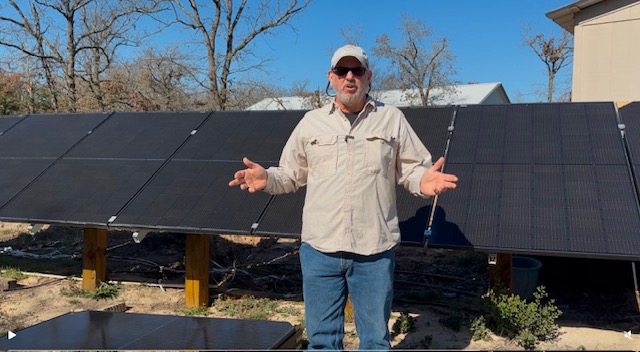
Solar power can be a great way to reduce your dependence on traditional electricity, but not all solar systems work the same way. Two of the most common types are grid-tied and off-grid solar.
Understanding the difference is important if you’re considering adding solar to your home.
Grid-Tied Solar
A grid-tied solar system remains connected to your local electric utility.
Solar panels produce electricity during the day, and that electricity can be used to power your home. Depending on the system and your utility agreement, excess electricity may be sent back to the grid.
When your solar panels aren’t producing enough electricity—such as at night or during periods of low sunlight—you can draw electricity from the utility grid.
The electric grid essentially acts as your backup.
Off-Grid Solar
An off-grid solar system operates independently of the electric utility.
Instead of relying on the grid when the sun isn’t shining, an off-grid home stores energy in batteries for later use. The system is designed to produce and store enough electricity to meet the home’s needs.
An off-grid system typically includes three major components:
Solar panels collect energy from the sun.
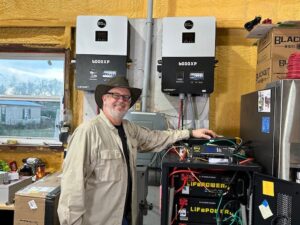
An inverter manages the electricity produced by the panels and converts DC electricity into AC electricity that can be used in the home.
Batteries store excess energy for use when the solar panels aren’t producing electricity.
Because an off-grid system doesn’t have the utility grid to fall back on, it must be carefully sized for the home’s energy needs.
Why Choose Off-Grid?
There are several reasons homeowners may consider going off-grid.
Rising electricity costs, concerns about power-grid reliability, and the possibility of losing power during severe weather can all make energy independence appealing. For some people, simply knowing that their home can produce and store its own electricity is the biggest motivation.
For us at Terra Hill Farm, our interest in off-grid solar is part of a larger goal of self-sufficiency and energy independence.
Is Off-Grid Solar Right for You?
Going off-grid requires more planning than simply installing solar panels. You need to consider how much electricity your household uses, how much sunlight your location receives, how much battery storage you’ll need, and what you’ll do during extended periods of cloudy weather.
And there’s another important consideration: local regulations.
DIY solar installations are subject to different permitting, inspection and licensing requirements depending on where you live. What is permitted for a homeowner in rural Texas may not be permitted in another community. Always check your local requirements before purchasing equipment or beginning an installation.
For us, learning how all the pieces work together has been an important part of our journey toward energy independence.
Solar panels make the electricity. Batteries store it. The inverter makes it usable. Together, they can give a home the ability to produce its own power—without depending on the electric grid.